For nearly three decades, digital marketing had one clear, undisputed target: getting listed on Page One of Google.
If your business was at the top of the search engine results page, you won the click, got the enquiry, and grew your business.
However, search engine optimisation (SEO) is undergoing its most radical transformation in decades. Driven by mass AI adoption and answer-based search engines, the rules of digital acquisition have fundamentally changed. Getting found is no longer enough; you now have to get chosen by AI models.
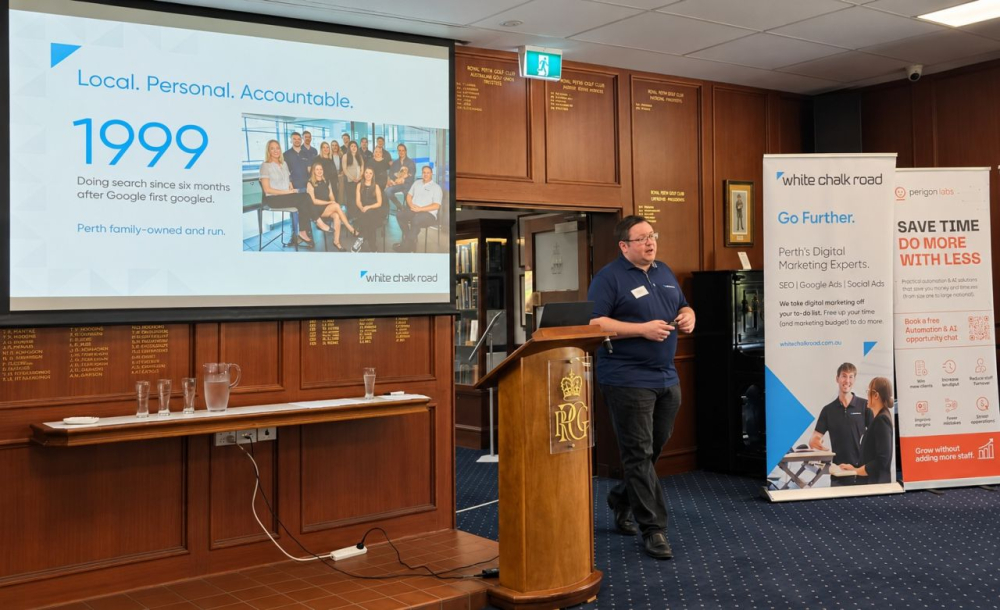
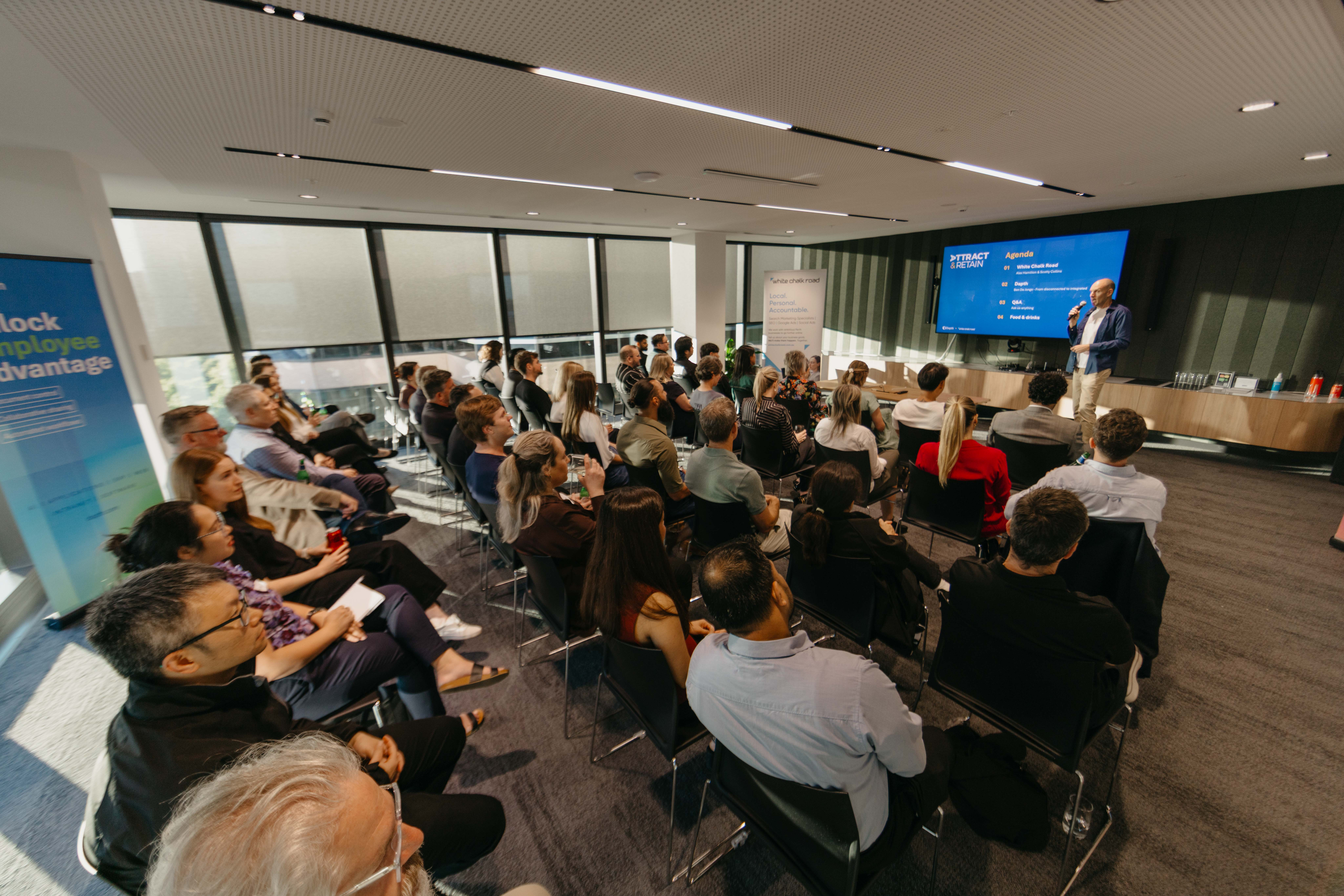
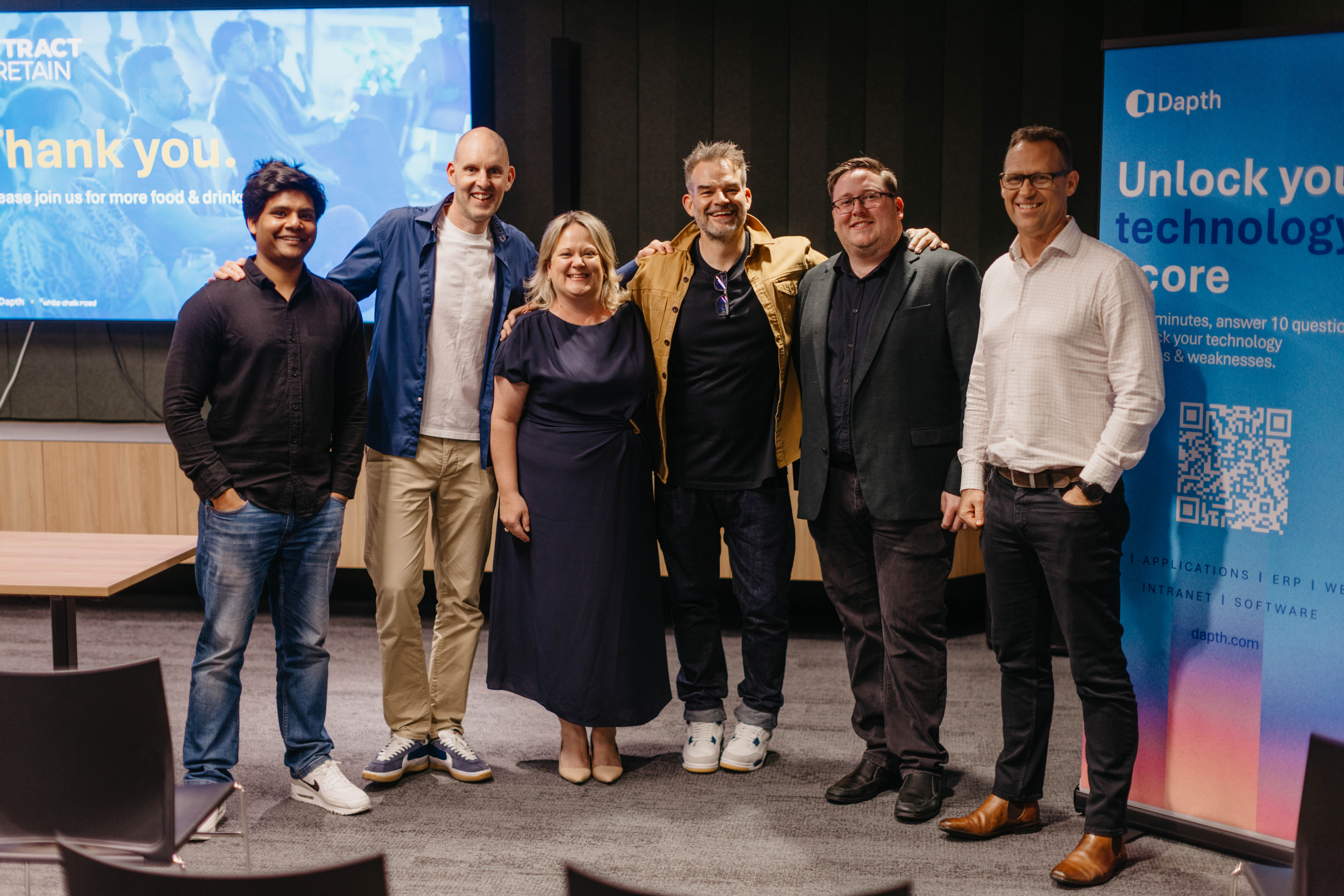
White Chalk Road recently joined forces with Perth digital consultancy Dapth for their final Attract & Retain event of 2026. Over 50 Perth business owners and industry leaders gathered in Westralia Square to explore a critical dual challenge:
How to optimise for AI search (Generative Engine Optimisation), and why your front-end marketing strategy will fail if it leads to disconnected backend operational systems.
From Keywords to Briefs
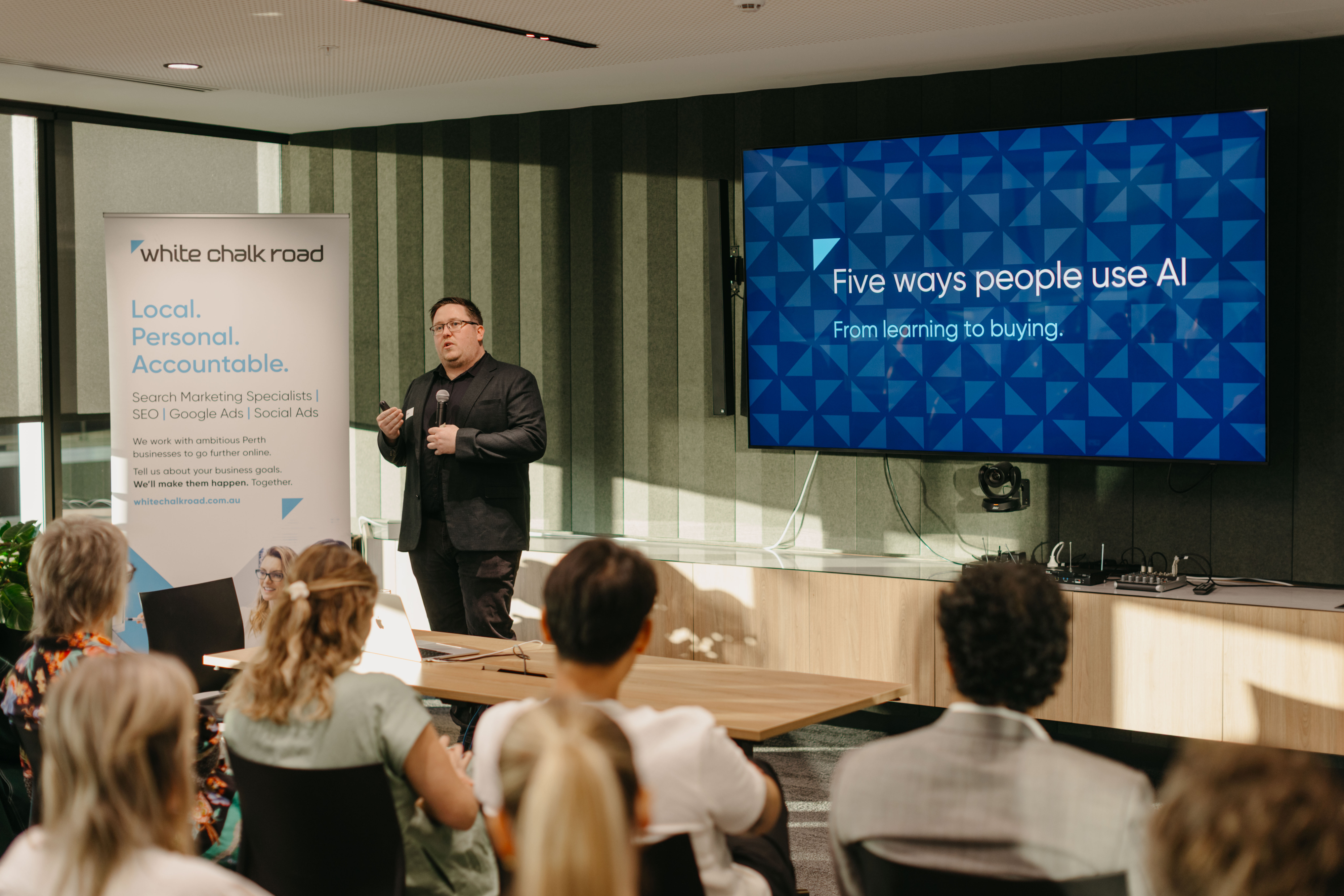
During the “Attract” portion of the evening, White Chalk Road Strategy Director Alex Hamilton broke down how search behaviour has shifted:
- From Keywords to Detailed Prompts: The average traditional Google search query is just 4.4 words. In AI Mode or conversational search, queries average 12+ words. Users aren’t searching for “plumber Perth” anymore; they are typing complete briefs, such as “Which local Perth plumber can replace a hot water system in Subiaco before midday tomorrow and offers upfront pricing?”
- From Clicks to Zero-Click Answers: In early 2026, 68% of Google searches ended without a single click (according to research from Australian emerging technology analyst firm Telsyte) to an external website. Consumers get synthesised answers directly within Google AI Overviews, ChatGPT, or their chosen platform before ever clicking a link.
- Massive Australian AI Adoption: 77% of Australians aged 16+ (17.4 million people) actively use AI tools like ChatGPT and Gemini. Furthermore, 39% of Aussie AI users are already delegating tasks to AI agents to book appointments, send emails, or initiate purchases.
SEO Gets You Found; GEO Gets You Chosen
So, where does this leave your website?
As Alex summarised: “SEO gets you found. GEO gets you chosen.”
Generative Engine Optimisation (GEO) is the process of ensuring your business is cited, trusted, and recommended by generative AI engines.
Do we still need SEO now with GEO?
Yes – the two work hand in hand together. A lot of the foundational SEO work directly impacts GEO. The AI platforms are still using content from your website, so your website still needs to have the right content, answering the right questions.
Your website needs to be technically sound and able to be crawled effectively by the AI bots to ensure you can be referenced in AI answers.
Higher Conversions, Even with Lower Traffic Volume
While overall website traffic volumes may decrease due to zero-click AI answers, the users who do click through arrive with unprecedented buying intent. Because AI tools pre-screen options to fit the user’s specific context, qualified click-through traffic from AI recommendations can boost site conversion rates by up to 60%.
The Hidden Bottleneck: Front-Door Acquisition vs. Back-Door Disconnection
Winning the search game with GEO is only half the battle. Following Alex’s presentation, Ben De Jonge, Head of Brand and Growth at Dapth, highlighted the second half of the equation: What happens when that highly qualified AI lead arrives at your business?
“Search is the front door. Systems are the house.” — Ben De Jonge, Dapth
Many growing businesses accumulate software piecemeal over years. Sales runs on a standalone CRM, finance uses Xero or MYOB, projects live in Trello or spreadsheets, and customer support happens via scattered emails.
When your back-end operational systems don’t talk to each other:
- Data becomes outdated: Pricing, availability, and service records sit isolated in individual spreadsheets, feeding inaccurate info back to public AI scrapers.
- Leads fall through the cracks: High-intent enquiries generated by AI search get delayed, double-handled, or lost due to manual hand-offs between teams.
- Reviews and reputation suffer: Operational delays lead to missed client expectations, resulting in lower customer review scores, which directly hurts your future AI search rankings.
Key Takeaways from the Q&A: Navigating the Future
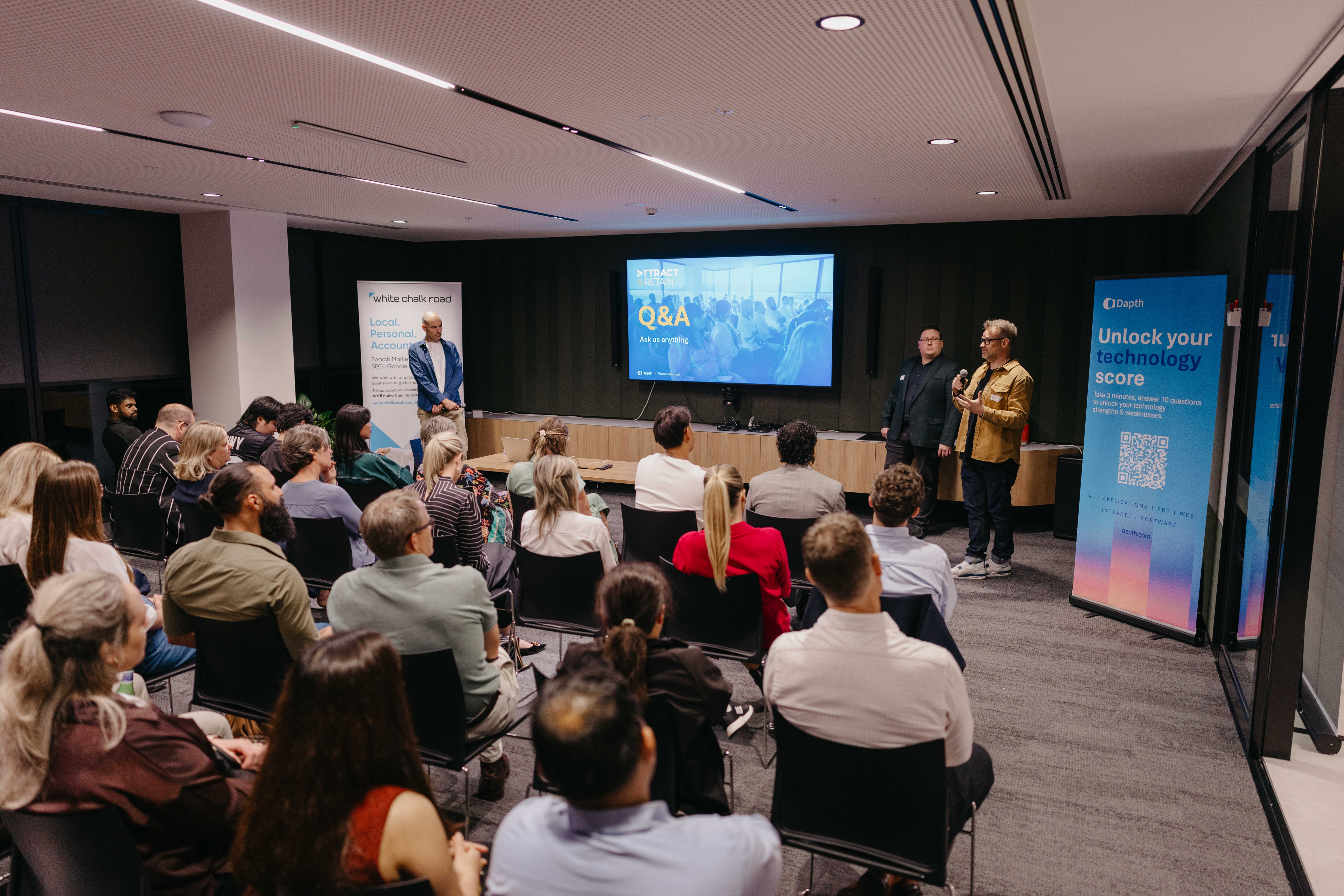
The event concluded with an interactive panel discussion with Alex Hamilton (White Chalk Road), Ben De Jonge (Dapth), and Phil Allen (Dapth). Some of the core questions attendees asked included:
Will AI Replace the Need for Custom Websites?
No. Your website remains the ultimate single source of truth for both human buyers and AI crawlers. AI models need verified, structured domain content to validate facts.
Does GEO Replace Traditional SEO?
No. Around 80% of solid GEO builds directly on traditional SEO fundamentals. AI models synthesise answers from indexed, high-authority web content, customer reviews, structured data, and third-party media. Without a technically sound, authoritative website, AI engines won’t have the grounded facts needed to recommend you.
What About “Vibe-Coded” or Unmaintained AI Apps?
While AI allows rapid prototyping of lightweight tools, reliance on unmaintained, quick-fix “vibe-coded” systems creates long-term tech debt. Sustainable growth requires robust, expert-built technology connected to a single operational platform (such as an integrated ERP like Odoo).
How Do You Protect Your Brand Against AI Misinformation?
AI bots can synthesise outdated or inaccurate third-party information. Brands must proactively manage digital footprints across all touchpoints, keeping schema markup updated, maintaining active review management, and regularly publishing verified, structured content.
What Should Your Business Fix First?
To future-proof your digital acquisition and operational delivery:
- Audit Your Digital Footprint: Ensure your brand’s core data, services, pricing, and FAQs are clearly structured on your website so AI engines can parse them accurately.
- Unify Front-End & Back-End Data: Map out how an enquiry moves from a search result to your CRM, job workflow, and invoicing system to remove manual re-entry bottlenecks.
- Strengthen Review Pipelines: Build automated post-service follow-ups to maintain strong public review signals across platforms.
Ready to Build a Future-Proof Search Strategy?
The landscape of digital search is changing fast, but you don’t have to navigate it alone. Whether you need to adapt your SEO for Generative Engine Optimisation or refine your digital strategy, the team at White Chalk Road is here to help.
Contact White Chalk Road today to discover how we can help your business get found and recommended in the age of AI search.